Development log · Firmware and manual
Polaris XL: a new milestone.
From an idea alongside the compact AstroStation to a device on the desk. Polaris XL now sits in its custom-designed, 3D-printed enclosure. It is time for a closer look.
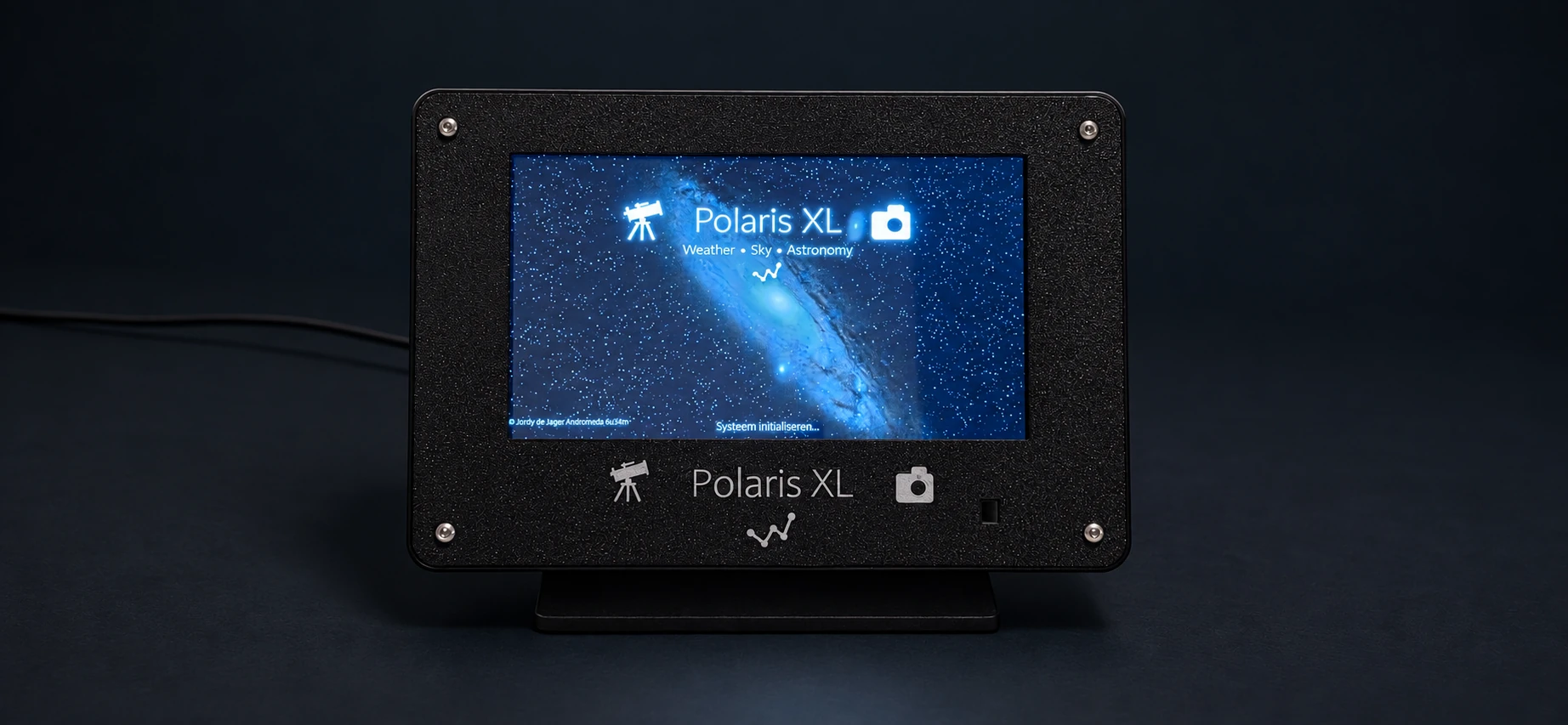
Where it began
A larger sibling, with the same idea.
Will it be worth taking the telescope outside tonight? That simple question started Project Polaris. The compact 2.8-inch AstroStation brought weather and astronomy together in a small desktop device. Soon another idea followed: what if that same overview had more room?
That became Polaris XL. After many evenings spent designing, programming, printing and trying things out, there is now a working 7-inch AstroStation. Its own enclosure, fixed desktop stand and familiar Polaris details are bringing everything together.
More room for the night
From weather forecast to observing plan.
Each part has its own place on the landscape touchscreen. WEATHER brings together current conditions and the hours ahead. ASTRO provides hourly observing advice, while TARGETS suggests deep-sky objects to explore, with their visibility, altitude and direction.
The Moon and planets also have dedicated screens. Alongside checking when the clouds may clear, you can see what will be above the horizon and how much moonlight to expect. INFO provides access to settings, support and updates. There is also a red night mode for use in the dark.
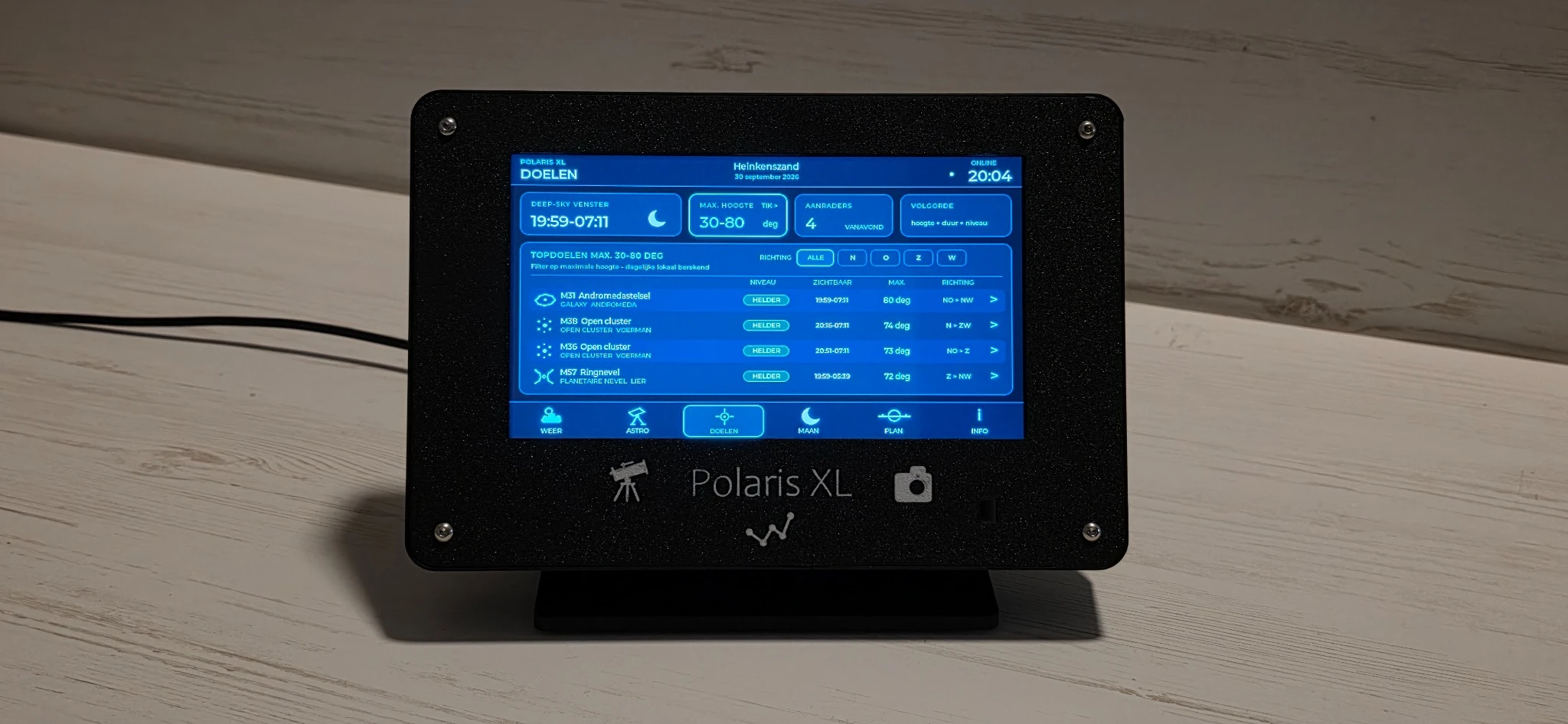
From Andromeda to the Ring Nebula: inspiration for the coming night. These photos were taken in September 2026, with Dutch screen labels. The updated manual includes current screenshots.
Designed and built at home
An enclosure with its own identity.
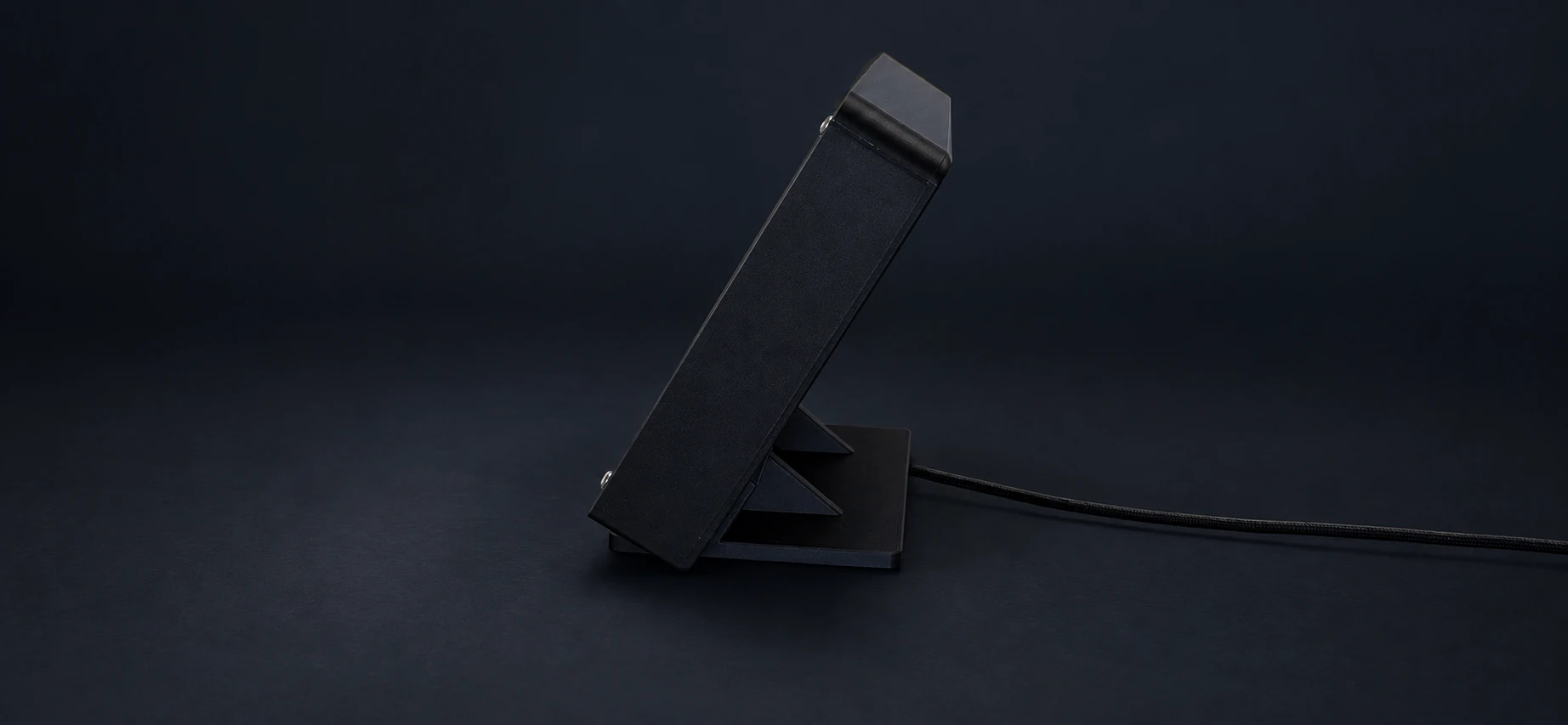
XL has now taken physical shape, too. The black enclosure is custom-designed and 3D-printed. The telescope, camera and Cassiopeia appear on the front alongside the Polaris XL name. The silver screws remain visible, and the angled desktop stand supports the larger display.
There is a personal touch at startup as well: the Andromeda image on the screen is one of my own astrophotographs. For me, it brings together the two things behind this project: the enjoyment of building something and of looking up at the night sky.
7 October 2026
Firmware and manual are ready.
The new stable firmware v0.15.0.66 has been released. XL uses KNMI HARMONIE via Open-Meteo for forecasts and MET Norway as an independent reference. It also includes the schematic HEMEL sky map. Manual v1.4 uses current screenshots to guide you from initial setup to support and updates; the PDF is in Dutch.
View firmware and update steps →Download XL manual v1.4 (Dutch) ↓
A closer look
The first product photos are here.
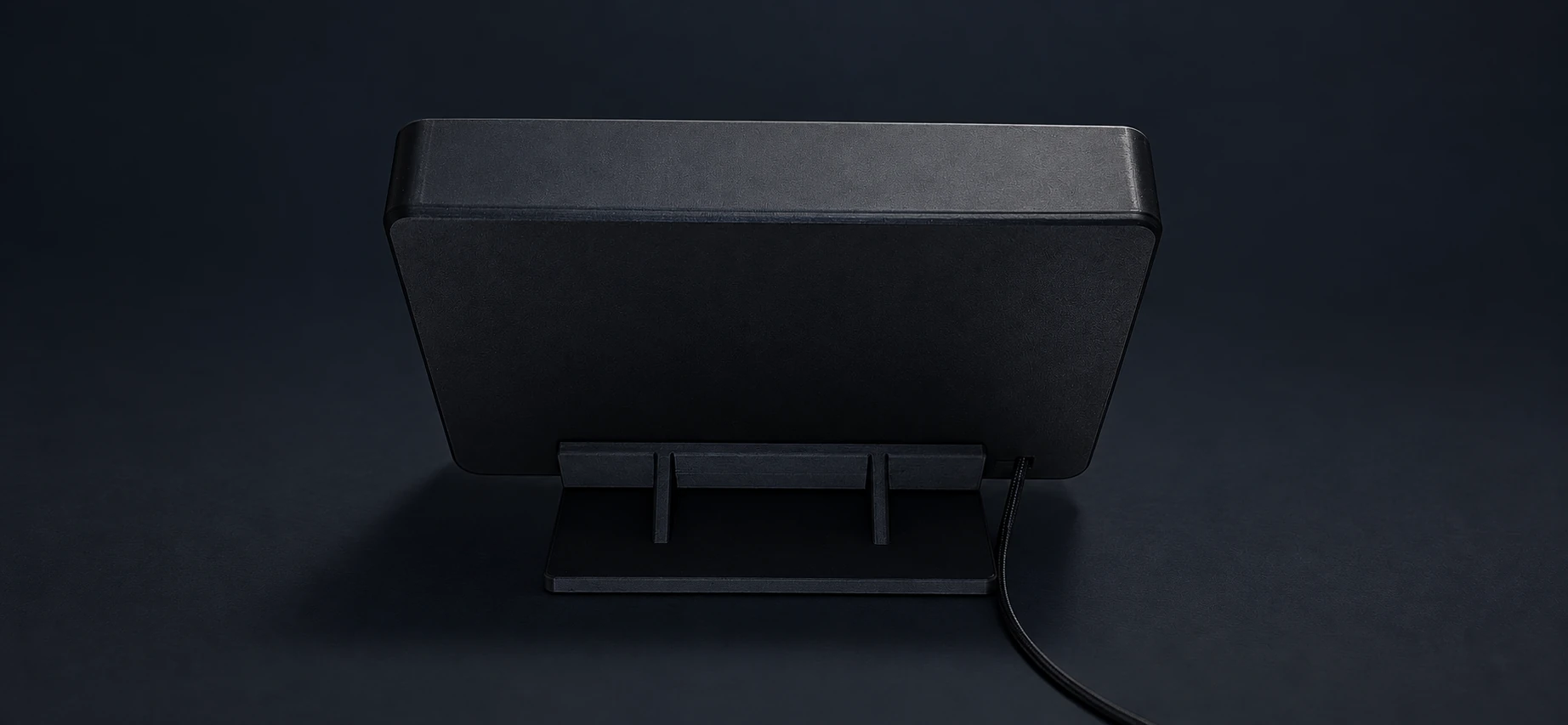
The gallery shows the different screens, rear enclosure and side profile. The photos of the compact AstroStation remain available alongside them.